Horse Carriages - Horse Buses - Horse Taxi
To view larger image - click on picture
Public Horse Transport
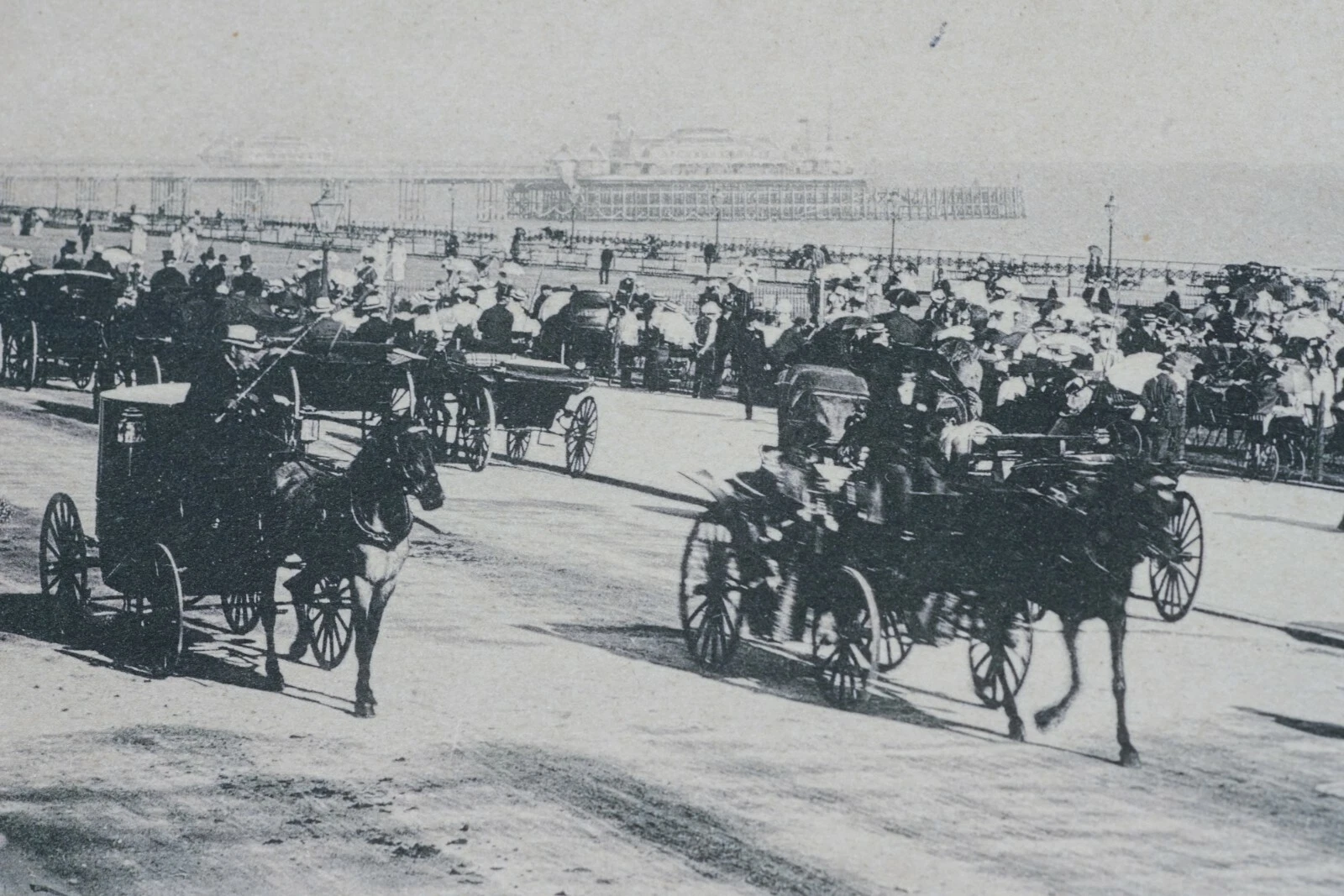
Step back in time to Brighton at the turn of the century, and you would find yourself amid a bustling traffic of horse-drawn buses, private horse-carriages, and swift, single- or double-horse "Fly" taxis.
Horse carriages had already been woven into the fabric of local life since the early 1800s, multiplying as Brighton expanded.
In neighbouring Hove, the rise of grand townhouses and the exclusive Brunswick Estate drew an elite, wealthy crowd—the perfect clientele for elegant horse carriages.
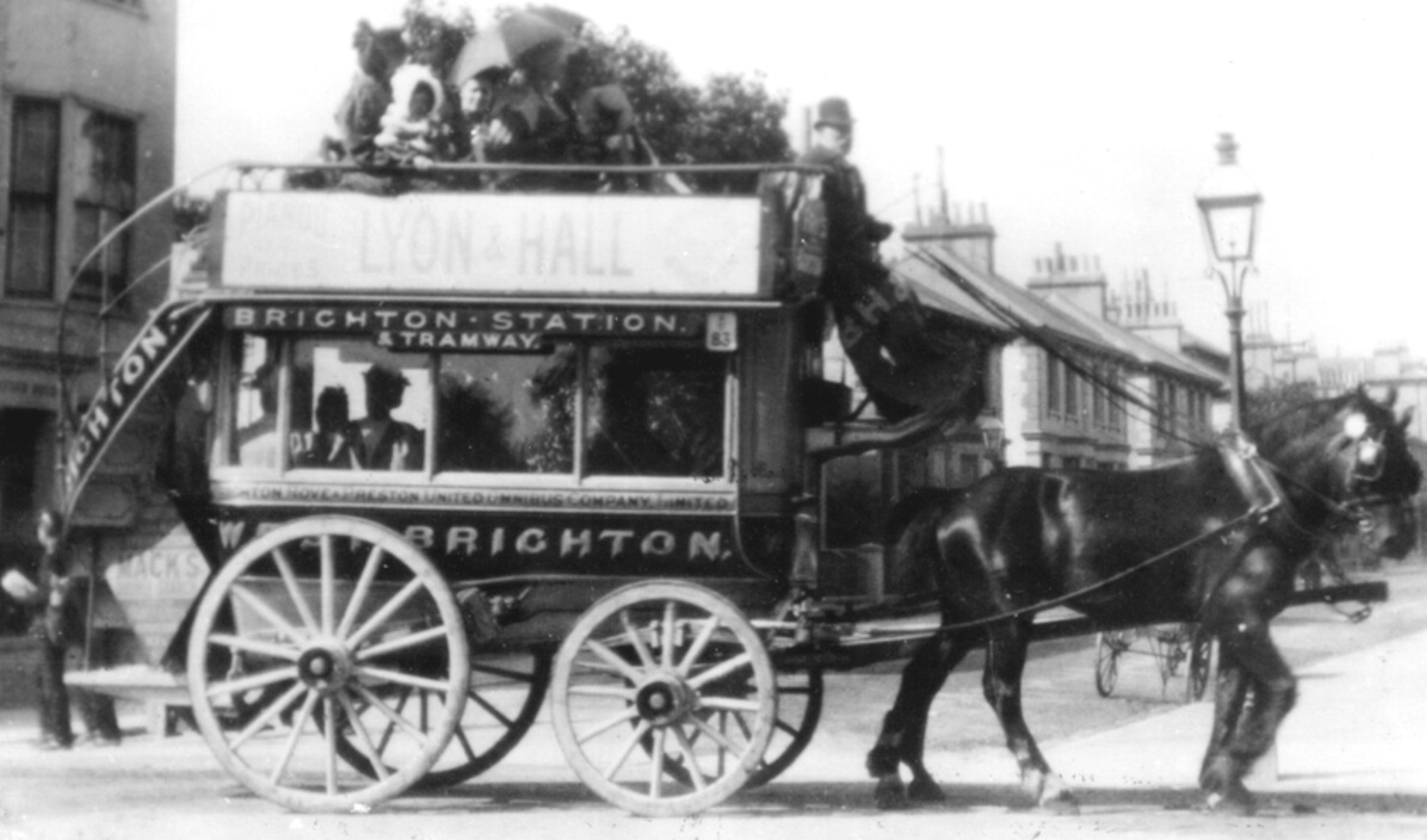
At the same time, a more public transit revolution was brewing; first proposed in 1838, Brighton's horse bus network made its historic street debut in May 1840, timed flawlessly to meet the very first passengers arriving from London and all stations down the line to the south coast's brand new Railway Station at Brighton.
To cash in on the influx of rail travellers, a wave of independent horse bus operators quickly emerged, competing fiercely to transport these passengers around town, down to the scenic seafront, and straight to the doorsteps of local hotels.
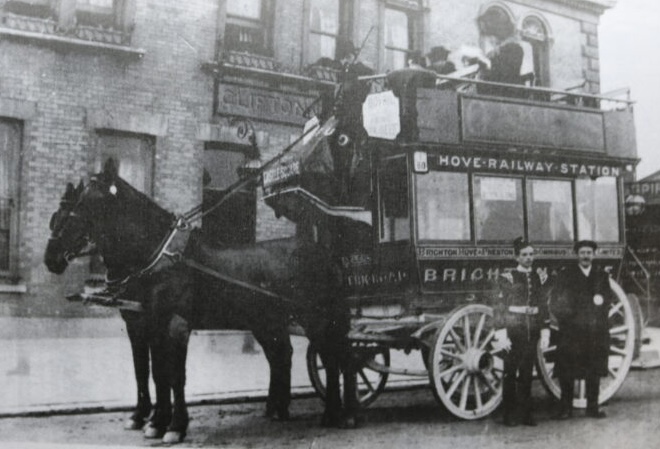
On 11 May 1840, Brighton's transit history took a major step forward with its first recognised, regular horse bus service, initially shuttling passengers between the Kemp Town Estate and Brighton Station.
Before long, the popular route stretched even further to reach Cliftonville railway station (Hove). The railway station has had name changes, in 1865 renamed 'West-Brighton', in 1894 'Hove and West Brighton' and finally in 1895 'Hove Railway Station'.
As the Brighton grew in the 1870s and 1880s, the horse bus network expanded rapidly, branching out into new neighbourhoods with dedicated routes to Preston Village, Preston Barracks/Lewes Road, Stanford Avenue, and Port Hall Road.
This now fragmented transit market came to an end in 1884, when dozens of independent operators pooled their resources to create the Brighton, Hove & Preston United Omnibus Company (BH&PU).
This new transport giant commanded a fleet of 30 buses and an impressive army of 150 horses.
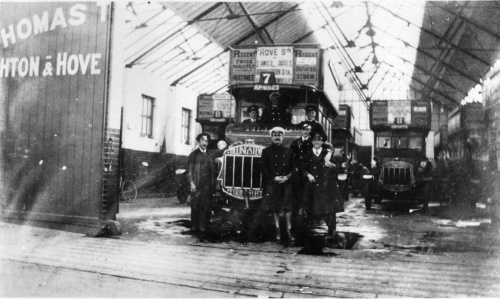
Operations were anchored at their main stables and garages on Conway Street in Hove, alongside secondary stables on Belfast Street (Hove) and Gloucester Place (Brighton).
Pulled by teams of two or four horses, these sturdy vehicles could carry up to 26 travellers at a time.
Despite their success, horse buses had distinct limitations: they were slow, walking or trotting at 5 to 8 miles an hour, struggled on steep hills, had fixed passenger capacities, rough ride no suspension system or pneumatic tyres, horses spooked easy from loud noises which lead to runaways causings accidents in crowded streets and horses could only work 4-5 hours a day demanding a rotating team of 10-12 horses just to keep one vehicle on the road for a single day. The life of a horse used for horse-buses was only 2 to four years, therefore a constant new supply of fresh horses was needed. The sun finally set on this historic era on 8 November 1916. On that day, a final BH&PU omnibus made its nostalgic last journey from Carlisle Road in Hove to Brighton Station, bringing the age of the horse-drawn public transport bus to an end in Brighton.
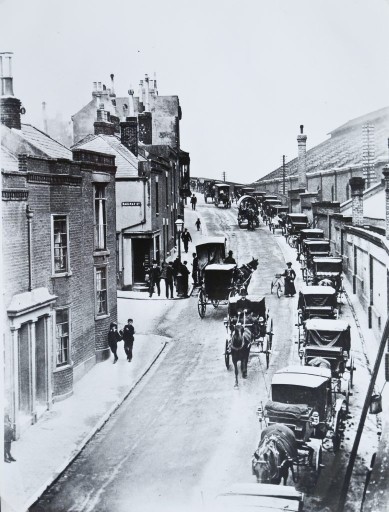
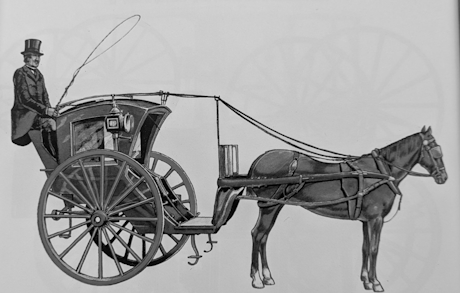
Brighton’s iconic taxi history began in 1809 when local carpenter John Butcher engineered a lightweight carriage based on the traditional Sedan chair.
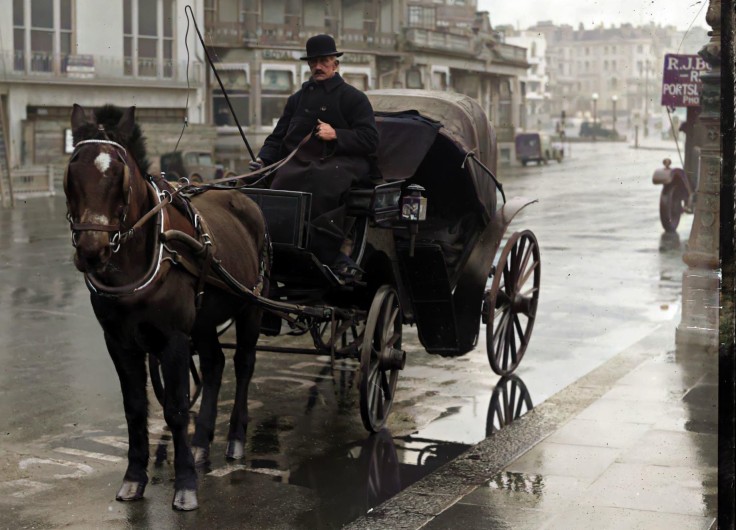
Dubbed the "Fly" due to its impressive speed, this 'horse-drawn taxi' became a distinctive feature found only on the streets of Brighton and Hove.
For nearly a century, these swift carriages dominated local travel until 1903, when the dawn of motorised taxicabs marked the start of their decline.
The outbreak of World War I in 1914 marked the actual beginning of the end for Brighton’s traditional horse carriages and Taxi.
As the military requisitioned vast amount of horses for the war effort creating a shortage, the iconic "fly taxis" and horse carriages started their decline and in the 1920s slowly vanish from local streets, adding to the complete phasing out of Horse buses in 1916.
Yet, horse-drawn transit didn't disappear overnight—photographic evidence proves the city's final horse taxi survived until about 1936.
Brighton Tramcars
Trams
Full 9.5 mile Tramway complete, Brighton Corporation Tramways was now established, making it difficult for other forms of public transport to compete for bus passengers.
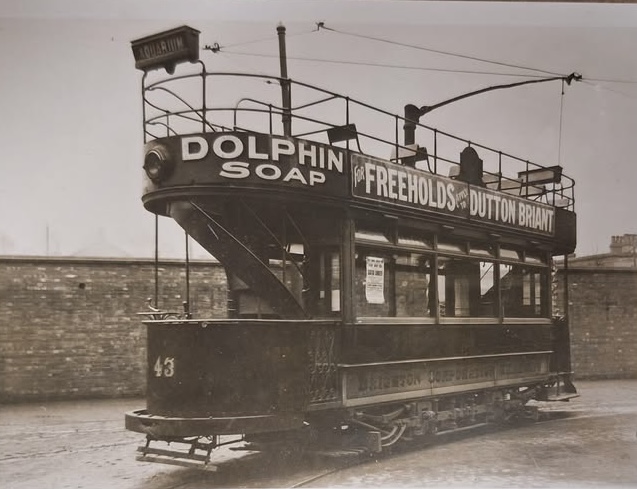
Electric trams had set a standard for smoother, cleaner, more reliable service at a cheap fare, offering a 7-day, early-morning-to-late-evening daily service with on most routes a tram arriving at the tram stop between 3 to 4 minutes.
They travelled along primary routes across the town, covering all areas most frequented by the public.
The tram design/construction had adopted the horse bus saloon sitting high on a chassis. The thought at the time was as the tram would travel faster than the horse bus, top speed rising from 8 mph to 14 mph, this would make it unstable on a bend in the tramway.
This meant the tram design had a high centre of grafity i.e. the distance from the road to the chassis making the vehicle less stable, this resulted trams having an open top deck constructed using light minimal materials to reduce the possibility of the tram rolling over when going round a bend. Another concern was high winds from the open sea blowing the trams over on their side.
This construction was repeated on early mechanical buses which also had open top decks until a redesign using a lower chassis in 1923 created a motor bus able to be built with a fully enclosed top deck. Brighton got it's first enclosed top deck bus in 1930.
Early Motor Buses - Electric Buses
Early Motor Buses
In 1903, Brighton, Hove & Preston United (BH&PU) transformed regional transit by launching its first Milnes-Daimler motor bus.
This strategic move successfully bypassed Hove's strict "no-rails" policy, introducing a flexible transportation network that did not rely on fixed tracks.
The initiative permanently altered commuting habits and opened up new public service avenues between the two towns. However, rapid expansion soon triggered severe community friction.
Between 1904 and 1907, BH&PU scaled its fleet to approximately 25 Milnes-Daimler buses, drawing intense public backlash. Once-supportive local businesses and residents quickly soured on the technology.
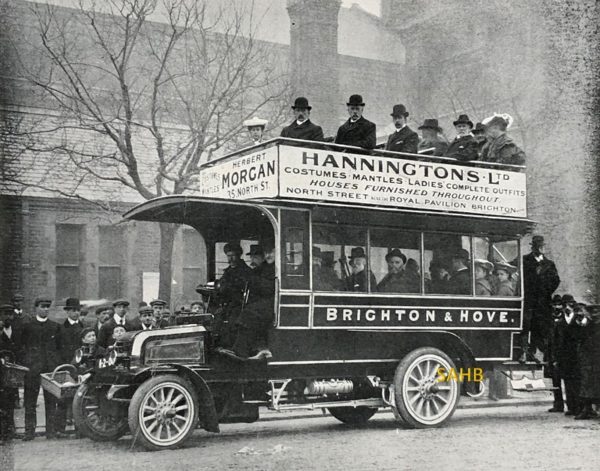
Both municipal corporations were inundated with complaints, with critics official characterising the vehicles as: Environmentally disruptive (emitting foul petrol fumes and splashing mud),
Structurally flawed (unreliable, heavy, and causing severe vibrations), Public nuisances (generating excessive noise on local streets)
While Hove preferred buses over trams, neither town actually liked the early petrol variants.
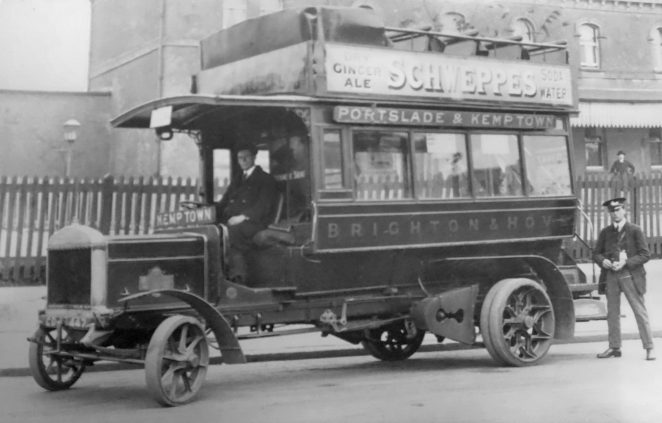
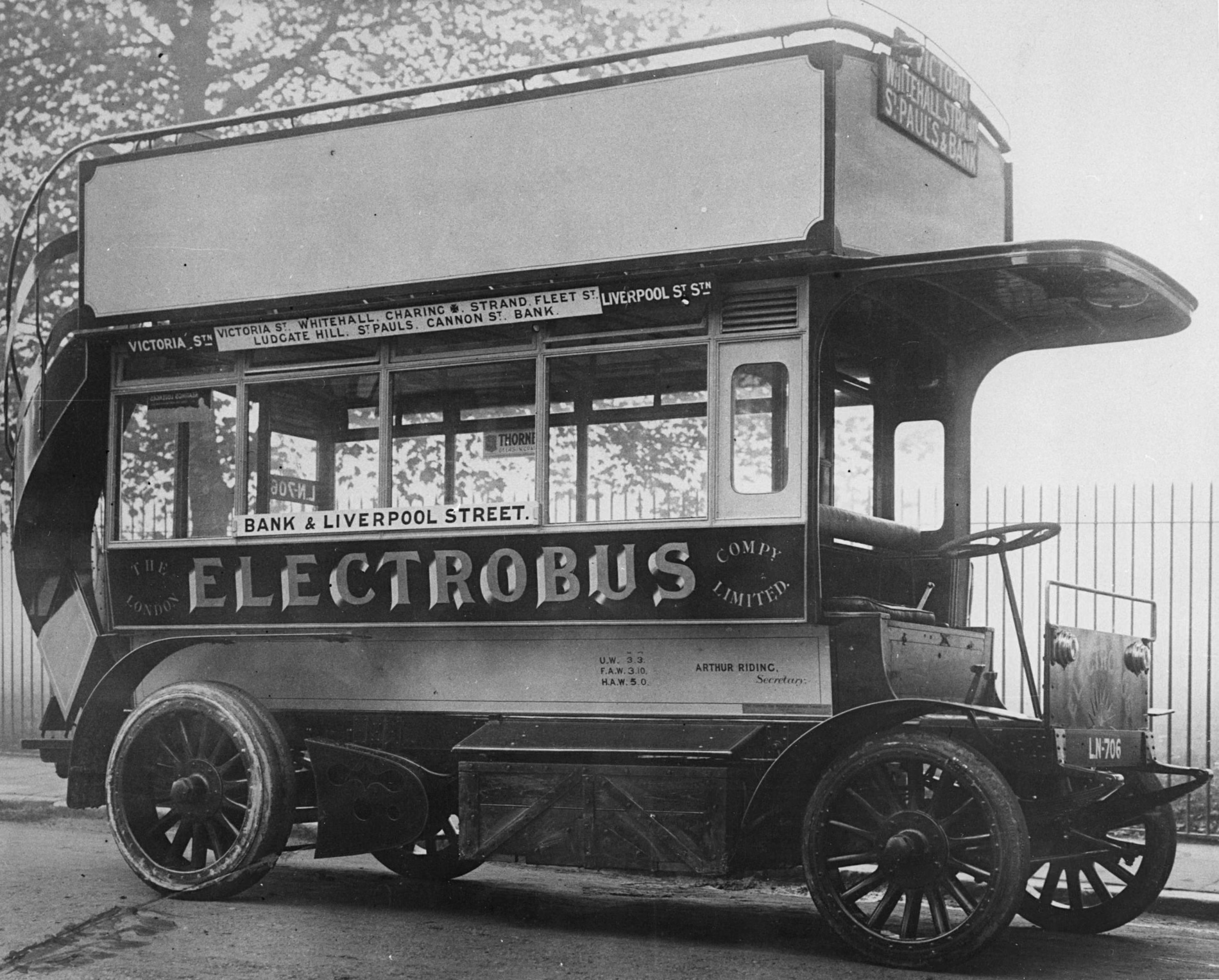
Shopkeepers and residents in both Brighton and Hove frequently petitioned against the mud-splashing, shaking, and smelly petrol fumes on narrow shopping streets. Brighton, Hove & Preston United Omnibus Company began replacing its horse buses with petrol motor buses, and on April 14th, 1908, they brought the first electric buses to the town (four). Brighton was the only place outside London where these omnibuses were used. Heavy battery weight caused constant overheating.
A designated bus route ran from Kemptown to Portslade, through Hove, where trams were rejected and managed when they were not over heating a top speed of 11-12 miles per hour. In addition, the Electrobus cost far more to run, paying higher electricity costs per unit than the trams, limiting profits and making it uncompetitive Ironically, the "reviled" early petrol buses outlasted their cleaner counterparts due to wartime constraints.
This left the streets entirely to the new generations of commercial petrol and diesel engines polluting the air without the public realising the effect this would have for future generations. But for the time being the main form of public transport being electic driven would hold off this new air pollution.
Using trams until 1939 followed by the trolley buses would partially delay heavy pollution until June 1961 when the trolley buses were also withdrawn.
Electric Buses
Purchased from the London Electrobus Company, the buses were driven from London to Brighton and garaged at a new purpose-built charging station in Montague Place, Kemptown, now a listed building.
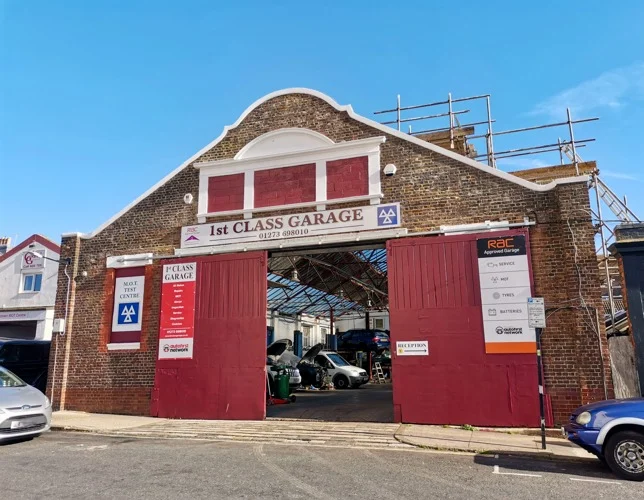
The battery charge lasting Four return trips to Portslade and back.
The distance travelling through Hove from Kemp Town to Portslade station is 5.7 miles taking 31 minutes (travelling 11 mph non-stop), adding time for bus stop pick ups and various traffic conditions, you would presume the journey took approx two to three hours.
It therefore shows that probably the Electrobus completeted at least four return journeys a day and at the peek of its operation having 6 Electrobuses traveling on the route each way. The batteries were changed at lunch time and the end of each day.
They used the 12 omnibuses until the final journey was made on April 1917, when the company that manufactured them went bust, leaving no spare parts to keep them operating.
Early Electric Trolley Bus
Electric Trolley Bus
Between 1913 and 1914, both Brighton Corporation and neighboring Hove Corporation launched historic, pre-WWI experimental electric trolleybus trials to test the feasibility of vehicles that drew power from overhead lines rather than relying on heavy batteries or operating on rigid tram tracks.
1913–1914 Brighton Corporation Experiment
Brighton Corporation erected 690 yards (630 m) of overhead wiring alongside The Level in Lewes Road.
In late December 1913, Brighton obtained the world's first double-deck trolleybus from the Railless Electric Traction Company.
Tramways Manager William Marsh personally took the wheel during early demonstrations.
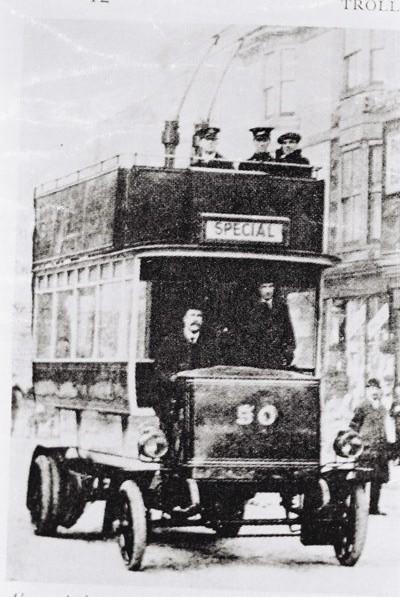
In January 1914, the vehicle ran along a special route from Rose Hill Terrace to London Road and Trafalgar Street, utilizing a "return skate" on the existing tram tracks to complete the electrical circuit. The Hove trial was deemed unsuccessful. The vehicle was quickly sold and sent north for use on the Keighley Corporation system in Yorkshire, leaving it as the only trolleybus to ever run on Hove's streets.
(A return skate is a conductive metal shoe or slider dragged behind a trolleybus on a metal tram track to complete the electrical circuit when the trolley bus operates from a
single-overhead-wire on a tramway)
1914 Hove Corporation Experiment
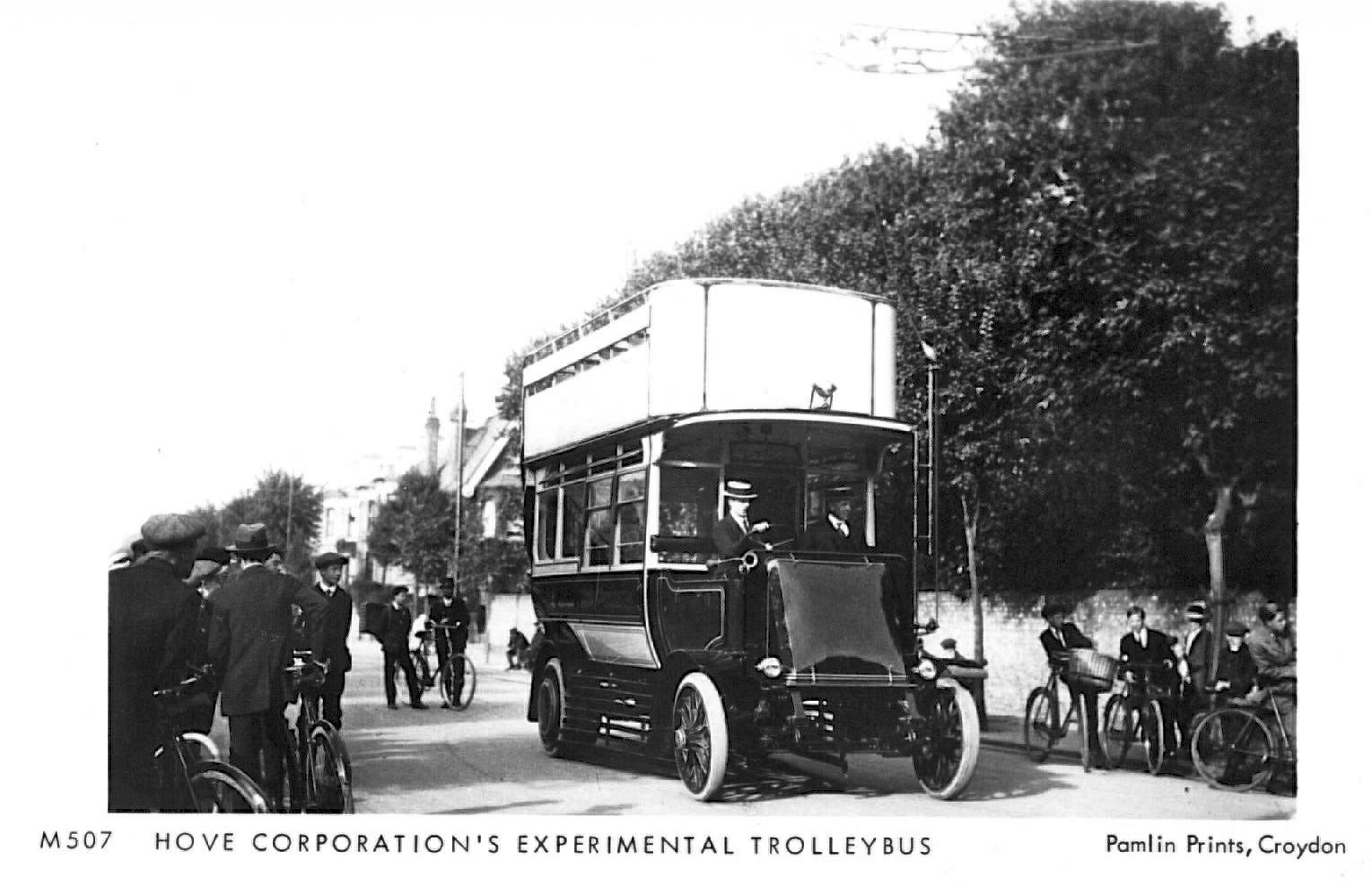
In September 1914, Hove Corporation conducted its own trial using the unorthodox Cedes-Stoll system.
This system used a small, lightweight "trolley" carriage that operated using top suspended overhead wires, connected to the bus via a flexible power lead.
The Route the trial used took place from Hove Railway Station to Hove Town Hall using a 33-seat double-decker open top trolleybus built with a Dodson body.
 Hove Corporation Trolley Bus 1914
Hove Corporation Trolley Bus
Hove Corporation Trolley Bus 1914
Hove Corporation Trolley Bus
While these early experiments didn't immediately result in permanent systems due to political friction and the outbreak of the First World War, they paved the way for the permanent Brighton trolleybus network which successfully operated across the town from 1939 until 1961.
Early Motor Taxi
Early Motor Taxi
Before a single motor taxi appeared on the streets of Brighton a change in the motoring law had to take place, the repeal of the Red Flag Act, this law had previously required a man with a red flag to walk ahead of a motor vehicle.
On the 14th November 1896, often called the Emancipation Act. The maximum speed limit was lifted from the previous 2 mph in towns and 4 mph in the country up to 14 mph.
Local authority corporations retained the power to cap this at 12 mph.
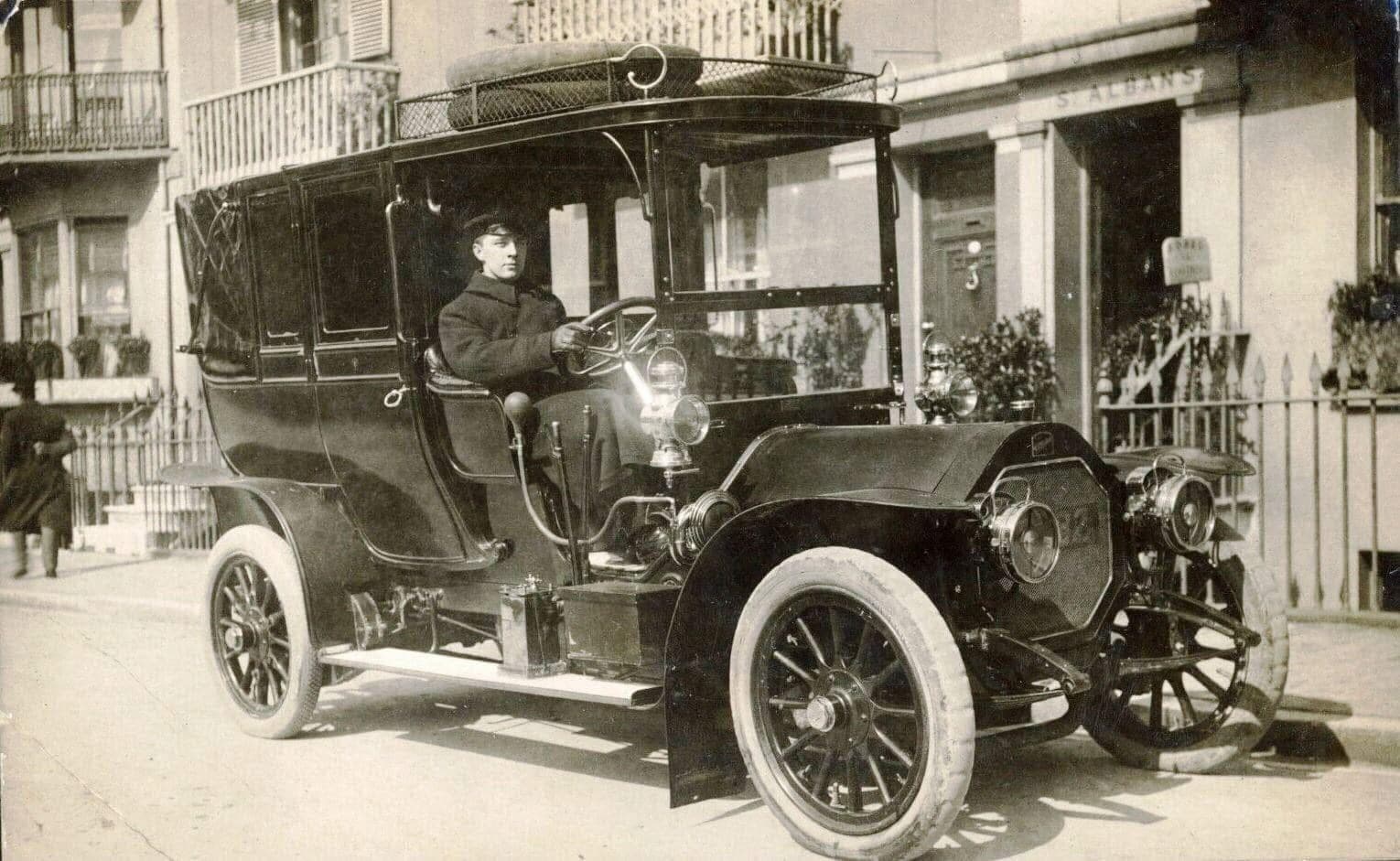
Following the repeal of the "Red Flag Act" via the Locomotives on Highways Act 1896, the shift toward motorised public transit began reshaping the seaside town. The exact transition of early four-wheeled motor car taxis onto the streets of Brighton unfolded progressively through the late Victorian and Edwardian periods
The exact year the very first individual four-wheeled motor car taxi was licensed or operated in Brighton is not strictly recorded in a single definitive local milestone, but motor-car taxis began replacing horse-drawn carriages at Brighton ranks during the Edwardian transition between 1904 and 1909
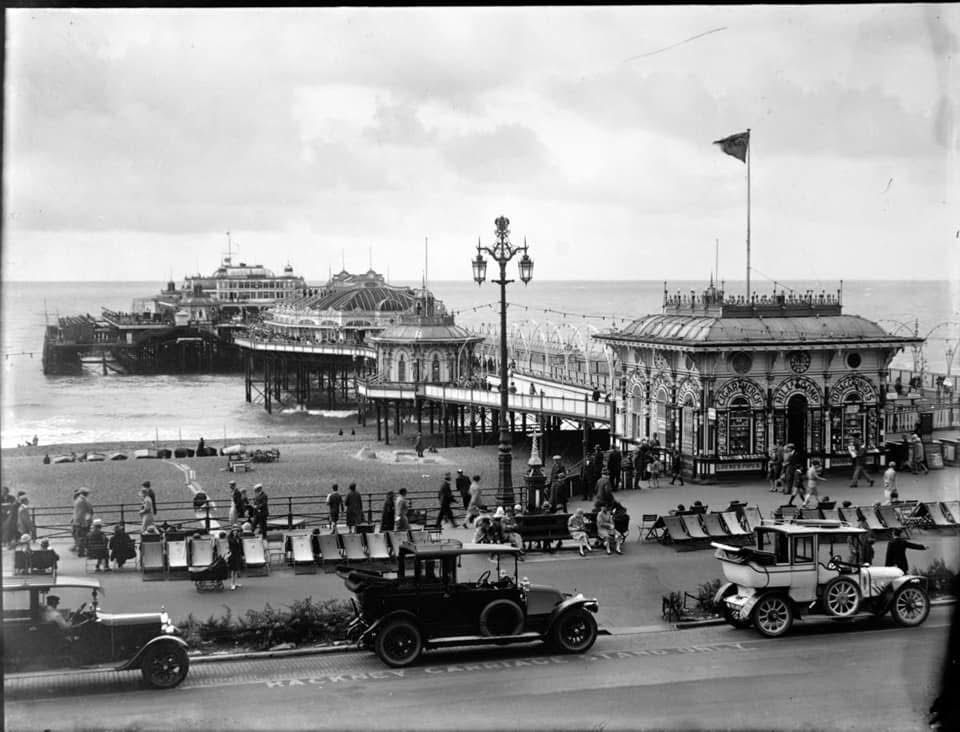
This section is ongoing as there is very little information available and we ask if you would like to contribute to this articale please contact our Society.
Southdown Buses - Thomas Tilling
Southdown Buses
Southdown Motor Services was founded in June 1915 in Brighton to help transport companies survive World War I shortages.
Head Office: Middle Street, Brighton.
Operational Hub: Pool Valley became the central bus station for routes connecting Brighton to East Sussex and West Sussex towns.
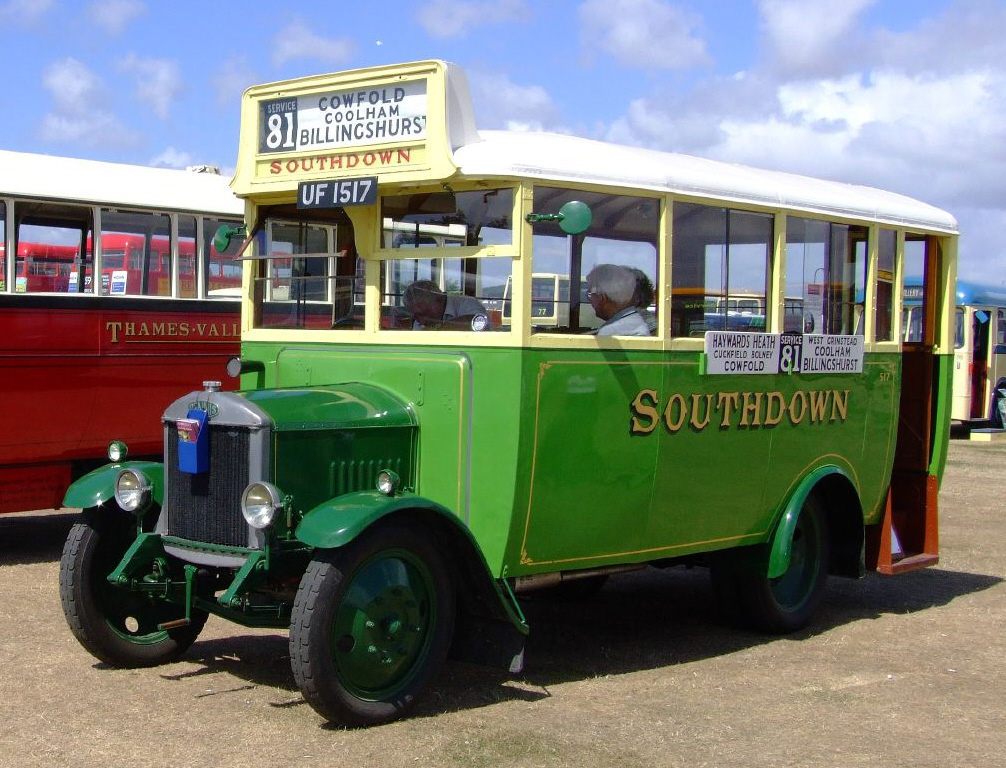
Southdown Motor Services was formed on June 2, 1915, through the amalgamation of the regional and country operations of three existing transport concerns: Brighton, Hove and Preston United Omnibus Co. (country services and excursions), Worthing Motor Services, and the London and South Coast Haulage Company.
An explicit condition of the formation agreement was that Southdown would not compete with local urban horse and motor buses inside central Brighton and Hove, which remained the domain of urban operators.
Instead, the company's original 1915 routes focused on regional country links, coastal connections, and early long-distance stage carriage services across East & West Sussex:-
Brighton to Eastbourne via Seaford: Started in May 1915 by predecessor Worthing Motor Services running via the Royal Mews in Brighton along the coast.
Brighton to Worthing: A core coastal stage route taken over directly from Brighton, Hove and Preston United.
Worthing to Pulborough, Storrington and Washington: Rural country routes inherited from Worthing Motor Services running north into the rural districts.
Lewes and Hurstpierpoint services: Country and haulage-derived routes operated via the London and Southern Counties Haulage Co.
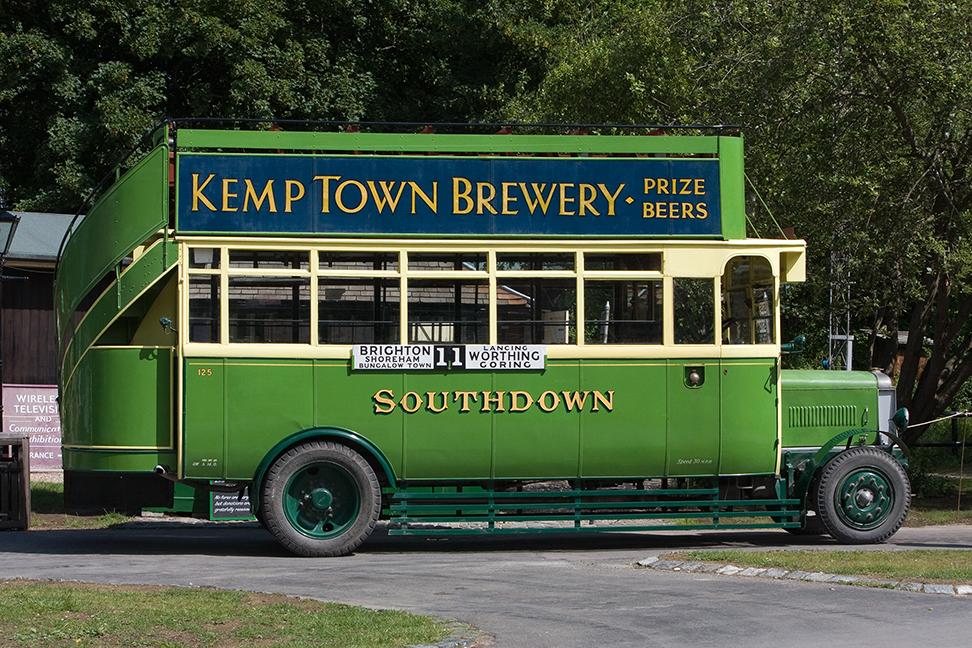
Southdown also offered assorted regional holiday and day-trip routes operating out of initial hubs like Madeira Drive in Brighton.
Ultimately, WWI shortages were the primary catalyst for the company's creation in the first place—the local operators had to merge their depleted fleets just to survive the war.
The out break of WW1 saw the British War Department requisitioned the best buses from bus operators fleet including the Brighton bus companies, London lost 1,200 a third of its fleet.
But what hit the bus operators even harder was the drivers and mechanics of theses buses were also taken and shipped to france to drive the soldiers to the Western Front in France & Belgium and maintain them.
It was only after 1919 that Southdown could access new chassis, such as their favoured Tilling-Stevens models,letting them build a modern bus and in 1925 built a double decker with a roof on. This meant they could start increasing their fleet expanding further into Sussex and other counties.
As Brighton expanded after the second world war they were given routes within the town.
Southdown Motor Services was officially permitted to operate local, integrated town routes inside Brighton and Hove on 30 June 1961.
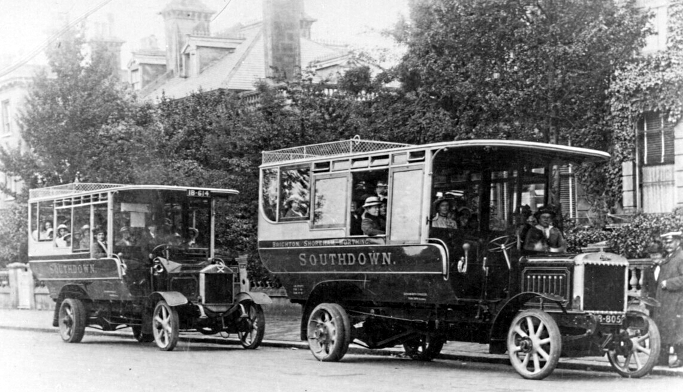
The restrictions they initially had to operate under finally ended with the creation of the Brighton Area Transport Services (BATS) Agreement in 1961.
This monumental treaty finally brought Southdown, Brighton, Hove & District, and the municipal Brighton Corporation into a single, unified local network.
Under BATS, routes were completely renumbered, and Southdown buses were finally permitted to pick up local town passengers under a shared, pooled revenue layout.
Thomas Tilling - Brighton Hove & District Omnibus Company
Thomas Tilling moved to London in 1846 at the age of 21 and become a 'jobmaster', the keeper of a livery stable who rents out horses and carriages by the week/month.
He first began operating buses in London in 1846. He soon became one of the most successful transport entrepreneurs of that era by controlling almost all major bus operators in the UK.
Thomas Tilling died in January 1893 and although he had 11 children, his public horse bus business was passed to two of his sons Richard and Edward and son in law Walter Wolsey, with the company becoming a Limited company in 1897.
As they continued to grow the business, in 1905 they owned 7,000 horses kept in 500 stables used for their 250 London omnibuses.
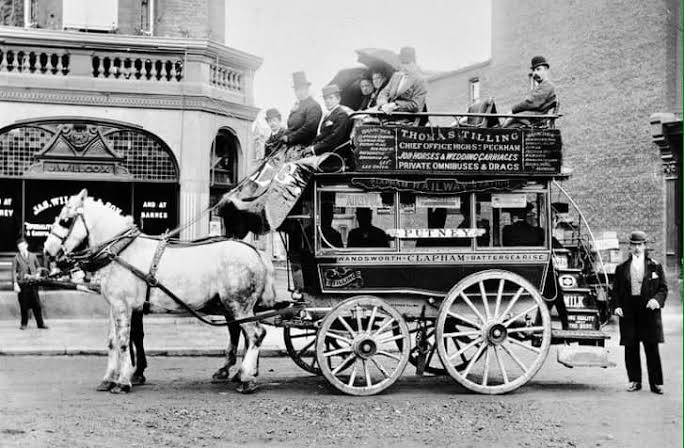
The Tilling family further expanded their empire into the provinces and they had a special eye on Brighton where they established premises in Holland Road Hove in 1914 March.
In 1915 they announced plans to convert this building into a motor bus garage and a site for bulk petrol storage.
The Thomas Tilling company first started operating its horse bus services in the Brighton area in February 1915, running a route between Portslade Station and Castle Square.
In November 1916, Thomas Tilling Ltd further solidified its presence by acquiring the larger bus operator Brighton, Hove and Preston United Company for £44,000 (Some of their country bus routes were taken over by Southdown Motor Services).
They continued the operating of the Electobus for one further year and started phasing out of the horse omibuses replacing them with motor buses.
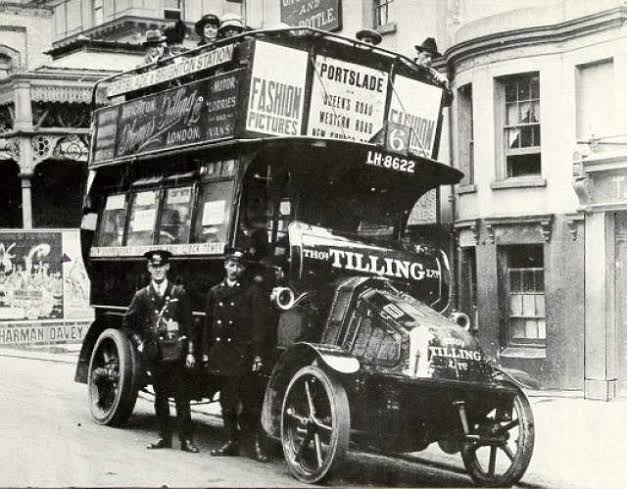 Thomas Tilling Brighton Motorbus
Additionally following this buy-out and they moved their entire operations from Holland road to the Brighton, Hove and Preston United Company depot on Conway Street.
Further that year chosing to brand all Brighton along with their London buses under the trading name 'Thomas Tilling'.
The Thomas Tilling bus company became Brighton Hove & District Omnibus Company in 1935 becomming a subsidary company of the parent company. Followed by being Nationalised n 1948.
Brighton Motor Cycle Taxi
Brighton Motor Cycle Taxi
It is probable that very few residents of Brighton are aware that back in 1920's Brighton had 20 Motor Cycle Taxis. Built in Birmingham they were only licenced Birmingham & Brighton.
The Baker Brothers from their cab rank at the Aquarium on Madeira Drive in Brighton, operated theses 1924 BSA 6/7HP “County” Taxi Sidecar Combinations offering a two seater passenger taxi to the public in Brighton.
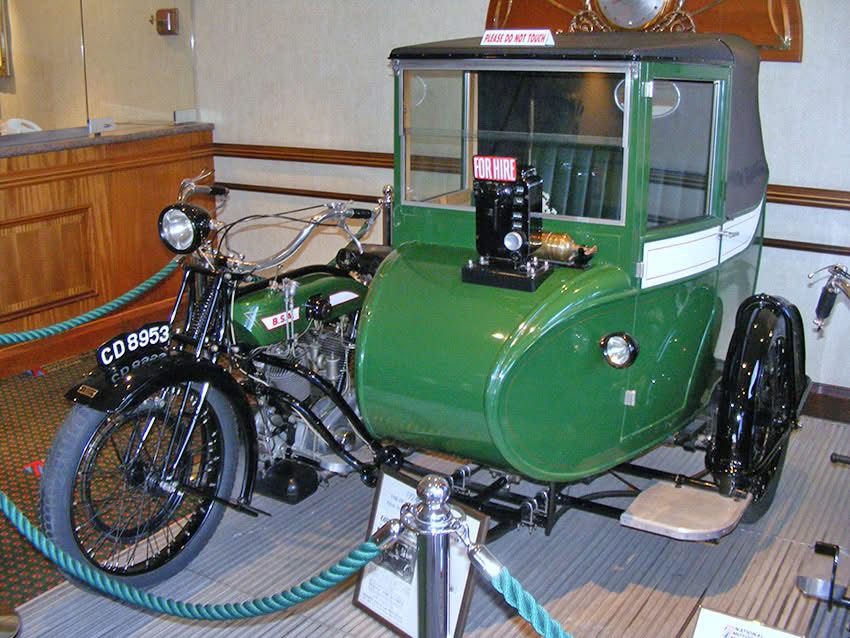 Brighton Motor Cycle Taxi 1920
The “County” Taxi
Marketed by the County Cycle and Motor Co. of Broad Street, Birmingham, this BSA was specially equipped as a passenger-carrying motorcycle taxi.
At the time, the idea was still relatively new in Britain. Motorcycle taxis were gaining acceptance in parts of Continental Europe, but many British local authorities remained suspicious of the concept.
County nevertheless went ahead with the idea, offering the 6/7hp BSA complete with a Mead & Deakin “Canoelet” sidecar for £252 14s 8d.
The taxi meter was an optional extra – and even the meter itself could be hired for £8 a year!
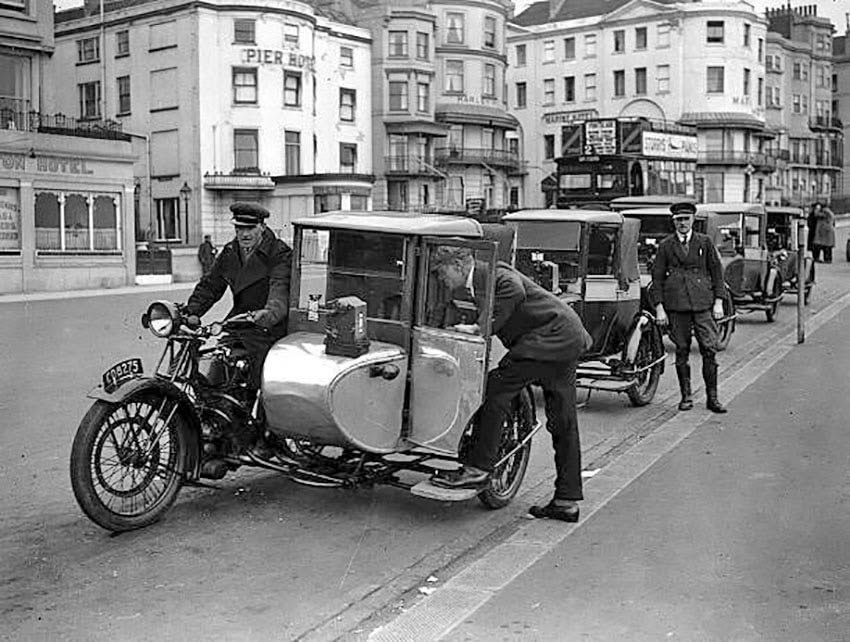 Brighton Motor Cycle TaXI 1920
Two Passengers, One Motorcycle
This was no ordinary sidecar.
The Canoelet featured elegant “Landaulette” coachwork designed to carry two paying passengers seated side by side.
Its conservative styling was deliberately suited to the carriage trade, giving it a distinctly more sophisticated appearance than the utilitarian motorcycle and sidecar combinations we might imagine today.
For passengers, it offered a surprisingly stylish way to travel.
For the operator, it provided a practical combination of motorcycle performance and passenger-carrying capability.
https://youtu.be/ErIMxKDojM0